
my Story
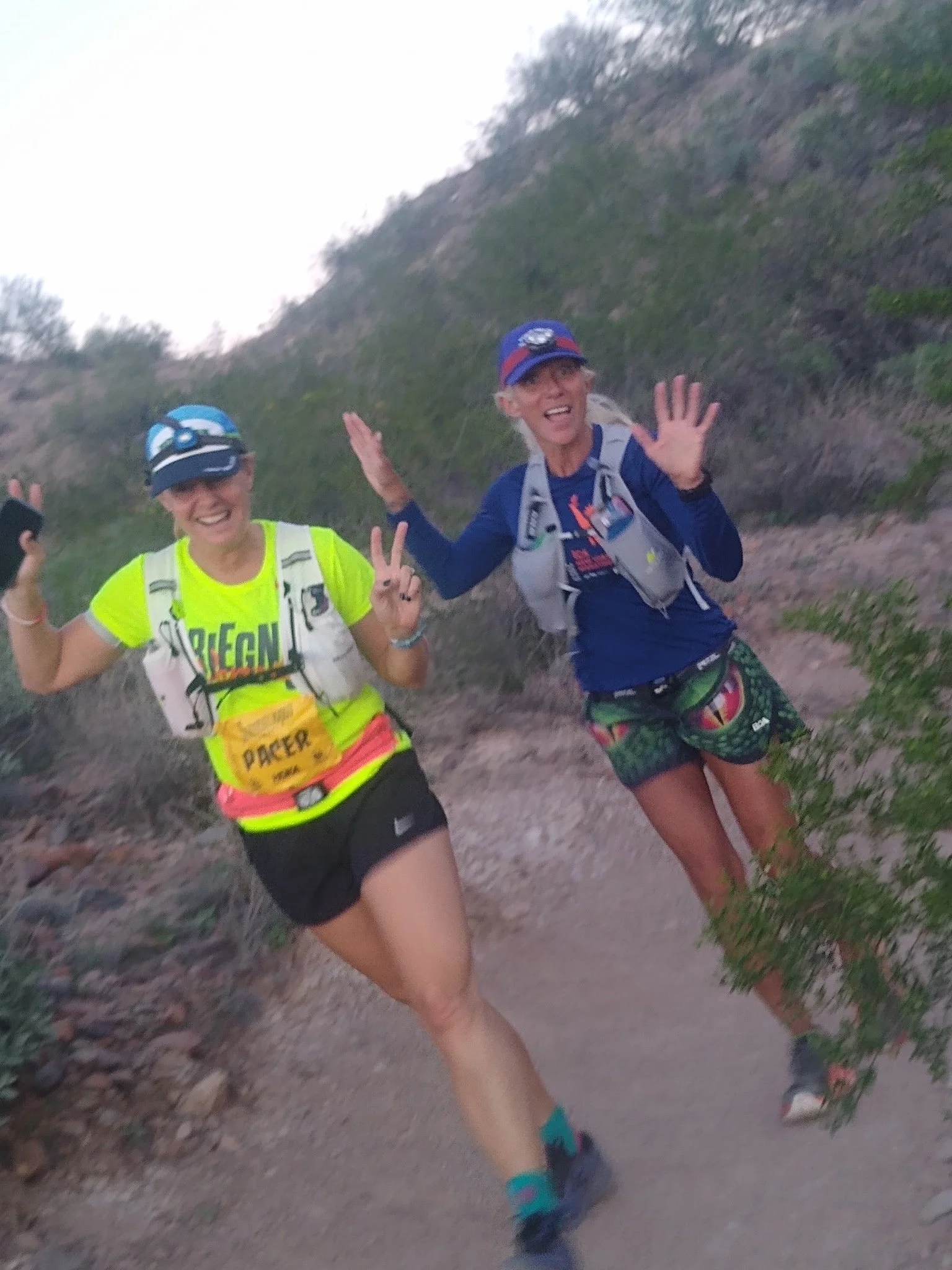
Javelina Hundred 100K, October 2025
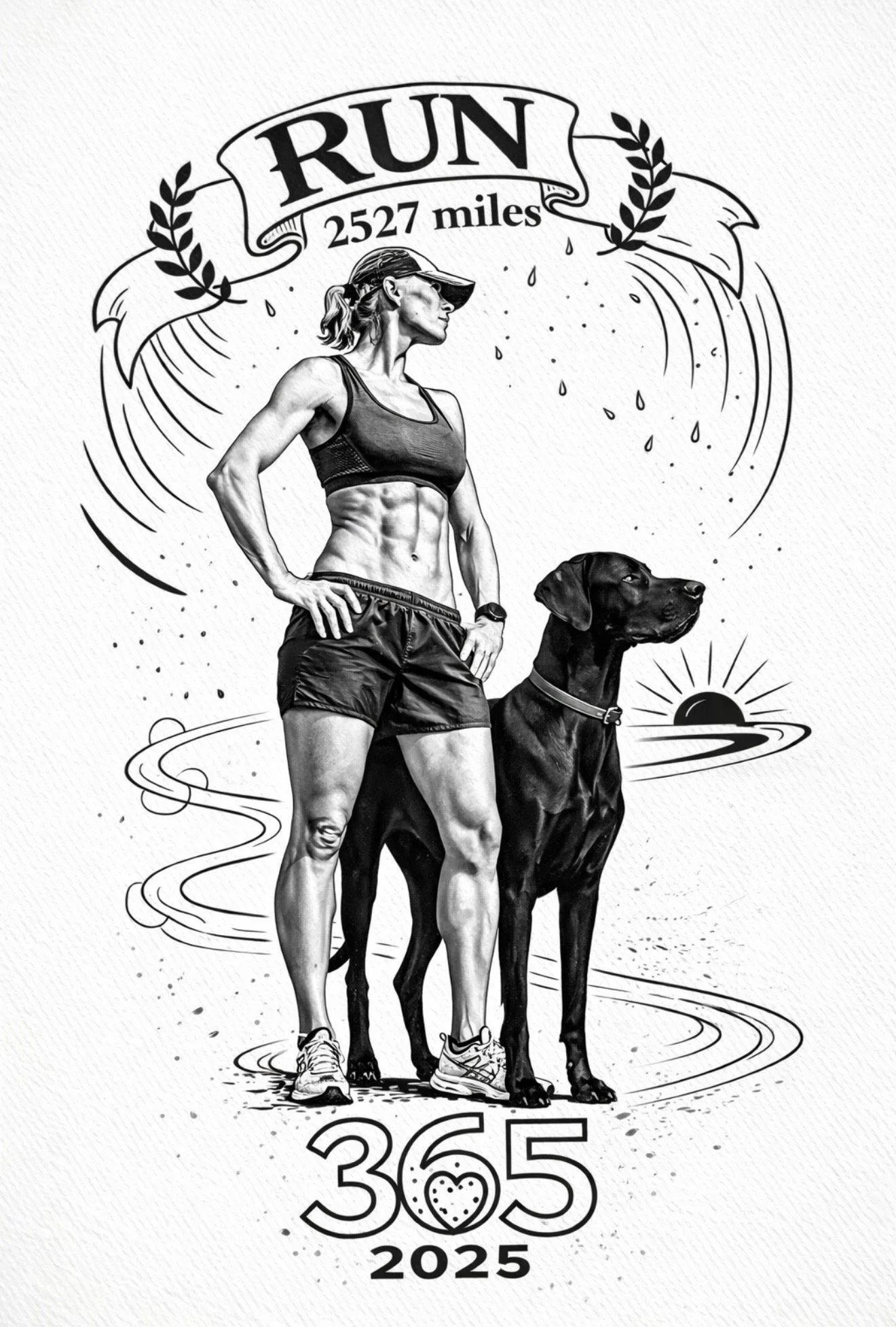
In 2025, I took on the “Run Every Day” challenge. Covering 2500 miles in one year!
I didn’t grow up dreaming about running marathons. In fact, I didn’t start running until later in life (39). What began as a way to get through a difficult chapter eventually became something much bigger. Running became the place where I learned just how much I could endure, rebuild and accomplish when I refused to quit.
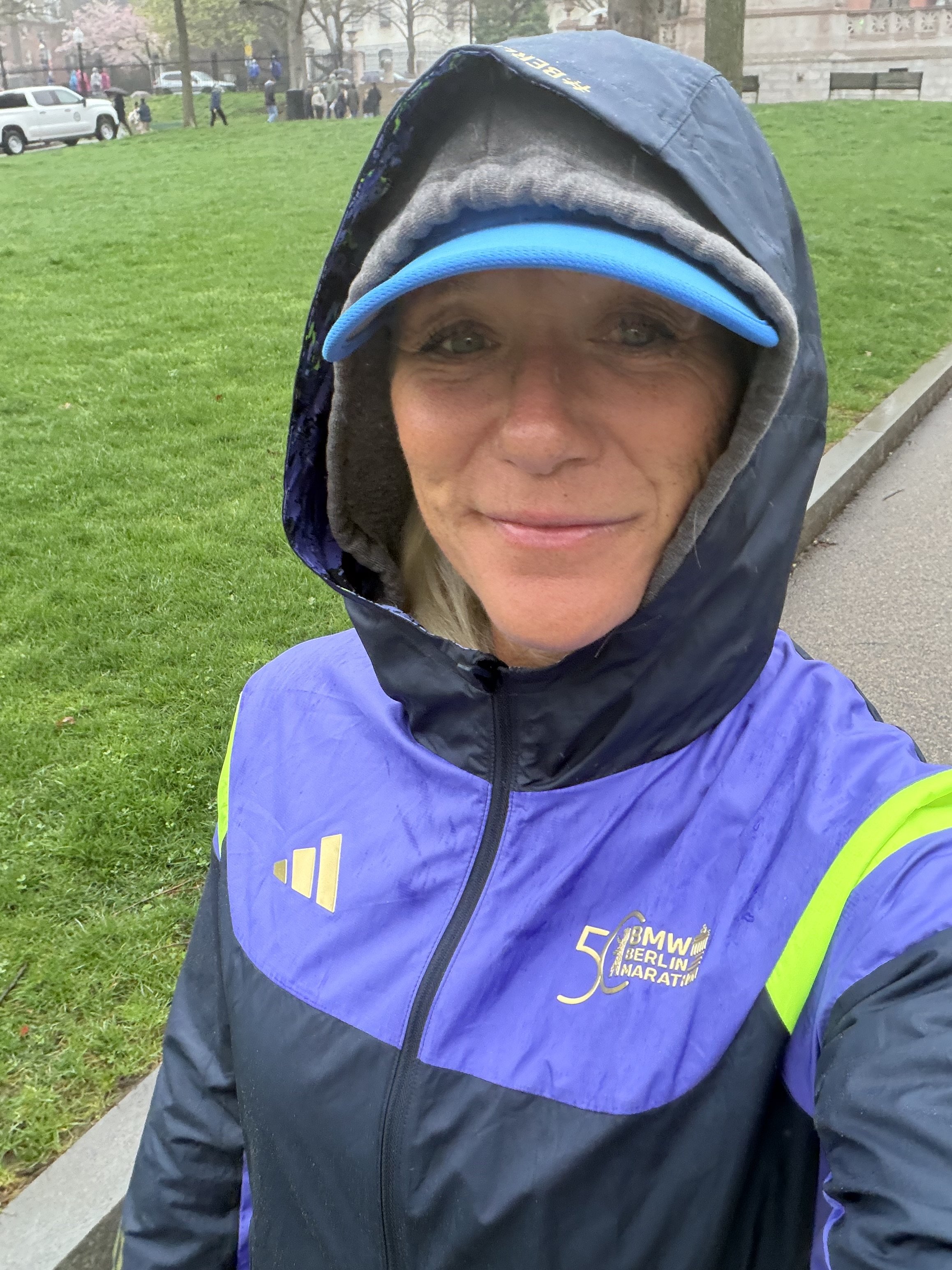
In 2014, that was put to the test when I was hit by a car while running. The accident left me with a traumatic brain injury, two strokes and a long road back. For years, running marathons wasn’t part of my life anymore. But eventually, I found my way back.
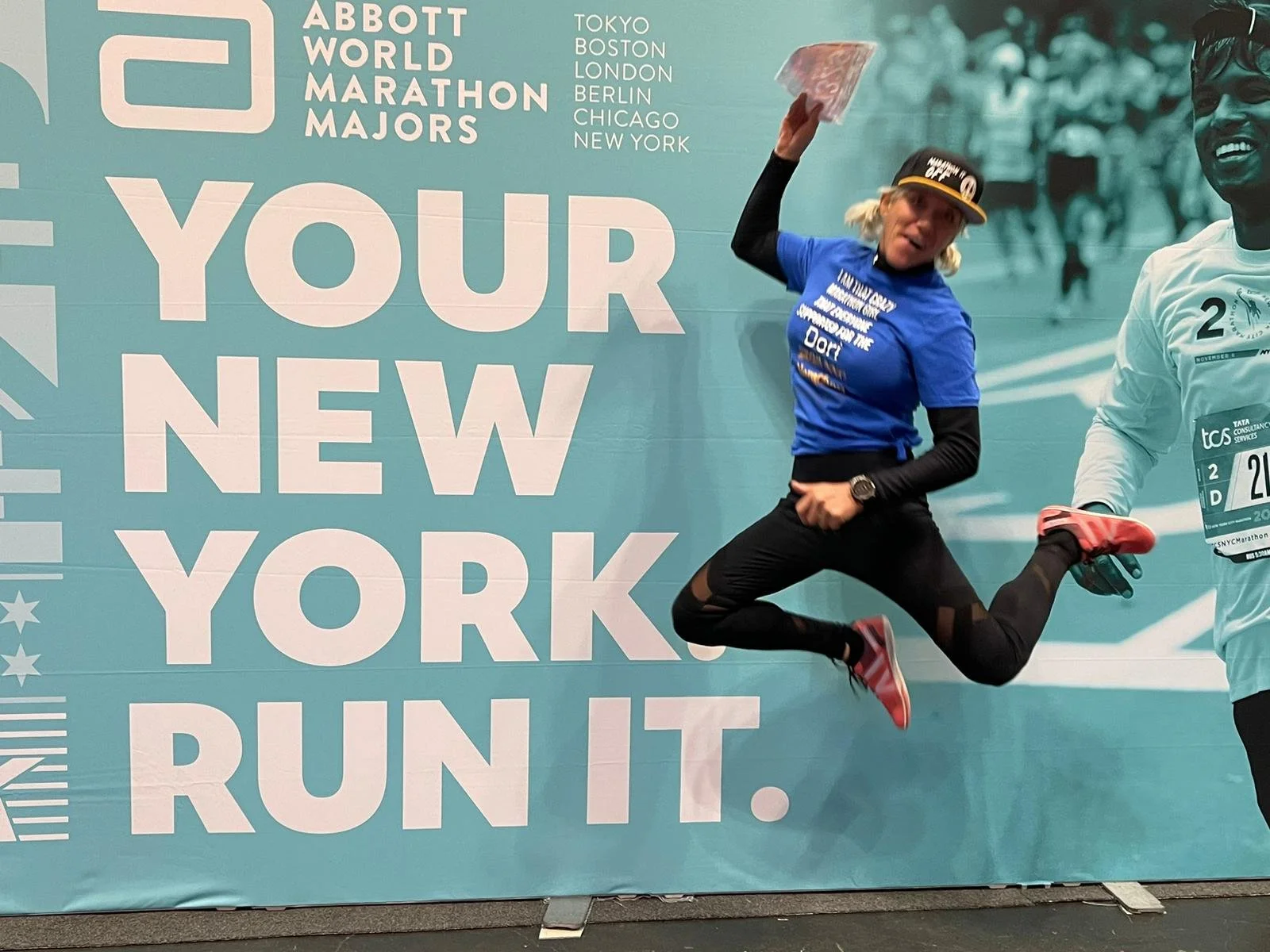
In 2023, I returned to the marathon starting line in New York City. Since then, I’ve kept asking myself one question:
What else am I capable of?
Apparently, my answer is: a lot of crazy things.
THE ROAD THAT MADE ME
If you look at my life today, you might see a runner, a business owner, a woman chasing finish lines and taking on challenges that probably seem a little crazy. What you don’t see are all the years it took to get here—or the responsibilities that didn’t disappear when life became difficult.
I started my business in 2007, and for nearly two decades it has been so much more than a company to me. It is my baby. But owning a business also means people depend on you. My employees had families, bills and lives of their own, and regardless of what was happening in mine, I had a responsibility to keep putting money on their tables. Through some of the hardest years of my life, my business never faltered. There were times when I couldn’t do everything myself, and I was incredibly fortunate to have people who stepped up and carried pieces I couldn’t carry. But I never stopped carrying the responsibility for the people who depended on me.
That is an important part of understanding my story. This isn’t a story about one terrible accident, followed by recovery and a triumphant return. Life wasn’t that neat. I lost pieces of myself, found some of them again, lost them again, and learned over and over how to keep moving forward. There were extraordinary days mixed into incredibly difficult years. There was work to be done, people depending on me, and a life that continued whether I felt ready for it or not.
There was no straight line back.
When I was hit by a car while running in February 2014, my life didn’t simply stop. And I didn’t suddenly lose the ability to do everything I had done before.
That’s an important part of my story.
I had suffered a traumatic brain injury, and the effects weren’t always obvious from the outside. Running was affected, but some of the things most severely impacted were the basic abilities I needed to function in everyday life.
I couldn’t work on a computer the way I had before. I couldn’t remember how to operate parts of the business I had built. I struggled to remember people’s names and to put sentences together. Sometimes I knew exactly what I wanted to say but couldn’t find the words to say it.
I couldn’t control my emotions. I couldn’t sleep. Loud noises overwhelmed me. Being around groups of people became incredibly difficult because my brain couldn’t seem to process multiple conversations happening around me at once.
I had always been social, but I became extremely introverted.
And my world became incredibly quiet.
For years, there was no radio playing in the background. No television. No bright lights. The sound and visual stimulation—the frequencies, the brightness, the constant input—could be excruciatingly painful for me.
Things most people never have to think about became things I had to control in order to get through the day.
So I lived in quiet.
Looking back, I don’t think people around me could fully understand just how different my everyday life had become. From the outside, they might see me working, traveling or occasionally running. What they didn’t see were all the things I had removed from my life just to make functioning possible.
Doctors offered medication to help manage some of what I was experiencing, but that wasn’t the path I wanted to take. So I learned to adapt. People stepped in to help me. One woman learned my scheduling system and took over much of the computer work that I simply couldn’t manage anymore. Somehow, I continued running my business while trying to figure out how to function in a brain and body that no longer responded the way they once had.
And through all of this, I still ran.
That’s where my story can become confusing if it’s reduced to a simple timeline.
I didn’t lose my ability to run overnight. I lost the running I knew.
Running became labored. It was difficult and often painful, and I wasn’t enjoying it anymore. But I kept doing it because running was one of the few things I still knew how to do when life became difficult.
Then came January 2016.
On my birthday, I ran the P.F. Chang’s Marathon in Phoenix.
For reasons I still can’t completely explain, everything worked that day.
No pain. No struggle. My body cooperated.
I ran 3:19.
I think of it as my Miracle Marathon.
That race qualified me for both the New York City Marathon and the Boston Marathon. For one day, I felt like the runner I had been before the accident.
But that day wasn’t proof that everything was fixed.
It was one extraordinary day in the middle of a recovery that was anything but linear.
During these years, I was undergoing regular head scans, and aneurysms had been discovered. I also began experiencing periods of excruciating pain throughout my body. That birthday marathon would ultimately be the last marathon I ran pain-free.
I went on to run New York and Boston in 2017 because I had earned those opportunities and desperately wanted to believe I could still do it.
I finished them both.
But finishing looked very different from what it once had.
I walked extensively. Every step could hurt. My head hurt. My body hurt. Everything seemed hypersensitive, as though my nervous system was reacting to things that once would have been ordinary.
Eventually, running almost completely disappeared from my life. Every once in a while I would try again—a short run, a 5K, maybe a 10K—but the pain was still there.
Yet I wasn’t sitting at home waiting for life to return.
In 2016, I traveled to Brazil for the Rio Olympics. My parents were terrified about me going because I was still struggling, but I needed to prove something to myself: I was still capable of living my life.
I watched Usain Bolt run his final Olympic race. I traveled. I experienced something extraordinary.
And then I came home to the same unpredictable recovery.
That was what those years were really like.
I could have an amazing week followed by months of struggling. I could believe I had finally turned a corner only to find myself right back where I had started. There were days when I could work, travel, run or appear completely fine—and other days when I couldn’t function normally at all.
One step forward could be followed by ten steps backward.
In 2018, I experienced a stroke while sitting at a stoplight.
Suddenly my arms felt as though they weighed a thousand pounds. I couldn’t lift them. The inside of my head felt like it was going to explode. Everything became fuzzy, and I felt as though I were fading away.
I called my dad.
I was terrified.
At the hospital, they determined that the aneurysms were still intact, which was an enormous relief. I recovered and once again continued moving forward.
After that first stroke came another challenge: vertigo.
For approximately a year and a half, vertigo became an almost constant part of my life. There was rarely a day when I felt completely safe or steady. I never knew when the world around me was going to shift or when my balance would disappear.
At one point, I fell badly enough that I needed 10 staples in my head.
That period was awful. Living every day without trusting my own sense of balance created a kind of fear that is difficult to describe. Even ordinary movement could feel uncertain. Cleaning had become cumbersome and dangerous. It was my business; what was I supposed to do?
Eventually, after working with chiropractic care and incorporating holistic approaches, the vertigo finally went away completely.
After a year and a half of living with it, having the world become still again felt enormous.
Then, in 2019, I had another stroke.
That one put me in the hospital for four days.
It scared me in a way that is difficult to explain.
Then, in 2020, I had knee surgery.
By that point, running wasn’t simply difficult. The way my body moved had completely changed after the accident. I had been hit by the car on my left side, and afterward even the way I walked was different. My running form wasn’t the form I had known before.
Eventually, I realized that if I was ever going to truly run again, I would have to learn to run all over again.
And I mean that literally.
I couldn’t simply put on my shoes, walk out the door, and start building miles. I had to relearn how my body moved when I ran—how I landed, how I carried myself, how my legs moved underneath me, and how to put everything together again.
There were attempts when I would start running and suddenly feel what I can only describe as electricity shooting through my legs. The sensation could become so intense that I physically couldn’t continue. I had to stop.
So I would stop.
And then I would try again. And I would cry, a lot!
There were periods when I could make progress and periods when running simply wasn’t possible. I wasn’t training for a marathon or chasing a pace. I was trying to teach my body how to perform an action that had once been as natural to me as walking.
That was incredibly frustrating. I remembered what it felt like to run fast. I remembered what my body had once been capable of. But remembering how to run and actually being able to make my body do it were two completely different things.
So I started rebuilding.
Little by little, I worked on the mechanics of running again. I had to pay attention to movements I had never thought about before. Even walking needed work because my movement patterns had changed so much.
And slowly, I began putting the pieces back together. I had taped my ankles, built a box for my knees, and experimented with so many mobility scenarios, only to be disappointed when none worked.
It wasn’t a comeback yet. It wasn’t about mileage, medals, or finish lines.
And before I could ever become a faster runner again, I first had to become a runner again.
Through all these years, however, I continued to live. I continued to operate my business with the help of the people around me. I traveled. I tried to run when I could. I had wonderful experiences. I had terrible months. I had setbacks and breakthroughs, sometimes practically on top of one another.
There was never a moment when someone flipped a switch, and I went from injured to recovered.
My recovery was messy.
It was unpredictable.
And it took years.
Some things changed permanently. Even today, I’m far more comfortable doing things on my own than I was before the accident. In some ways, the independence I developed during those years simply became part of who I am.
But the biggest thing I learned was this:
A setback didn’t have to determine my future.
I couldn’t always control what my brain or body would give me on a particular day. I couldn’t control whether tomorrow would be a good day or whether another difficult stretch was coming.
But I could keep moving forward whenever I was able.
Sometimes that meant running a 3:19 marathon.
Sometimes it meant getting through a day.
Both counted.
Twelve years later, there still isn’t a neat ending to this part of my story. I still have unpredictable moments. Sometimes my arms shake, and I have tremors in my hands. Sometimes I feel a pressure in my head that I can’t explain. There are things that remain from what happened to me, and there may always be things I have to live with, adapt to, or simply accept.
But somewhere along the way, I stopped waiting to feel completely normal before allowing myself to live completely.
I don’t know what tomorrow will bring, and after everything I’ve been through, I’ve learned not to assume that a good day means every difficult day is behind me. I still listen to my body. I still make adjustments. There are things I may choose never to do again—and you probably won’t find me getting on a roller coaster anytime soon.
But I’m running.
I’m working.
I’m traveling.
I’m chasing enormous dreams.
And I’m doing the things I love.
What happened to me will always be part of my story, but it doesn’t get to write the rest of it.
I’ve run marathons, completed my first 100K, run thousands of miles, earned my way to Boston, and I’m now chasing the Abbott World Marathon Majors SIX-STAR Medal.
In 2027, I’ll run Tokyo and London — the final two stars of that journey. And because apparently marathons weren’t enough, at 55 I decided to take on another challenge completely outside my comfort zone: training for my first full IRONMAN.
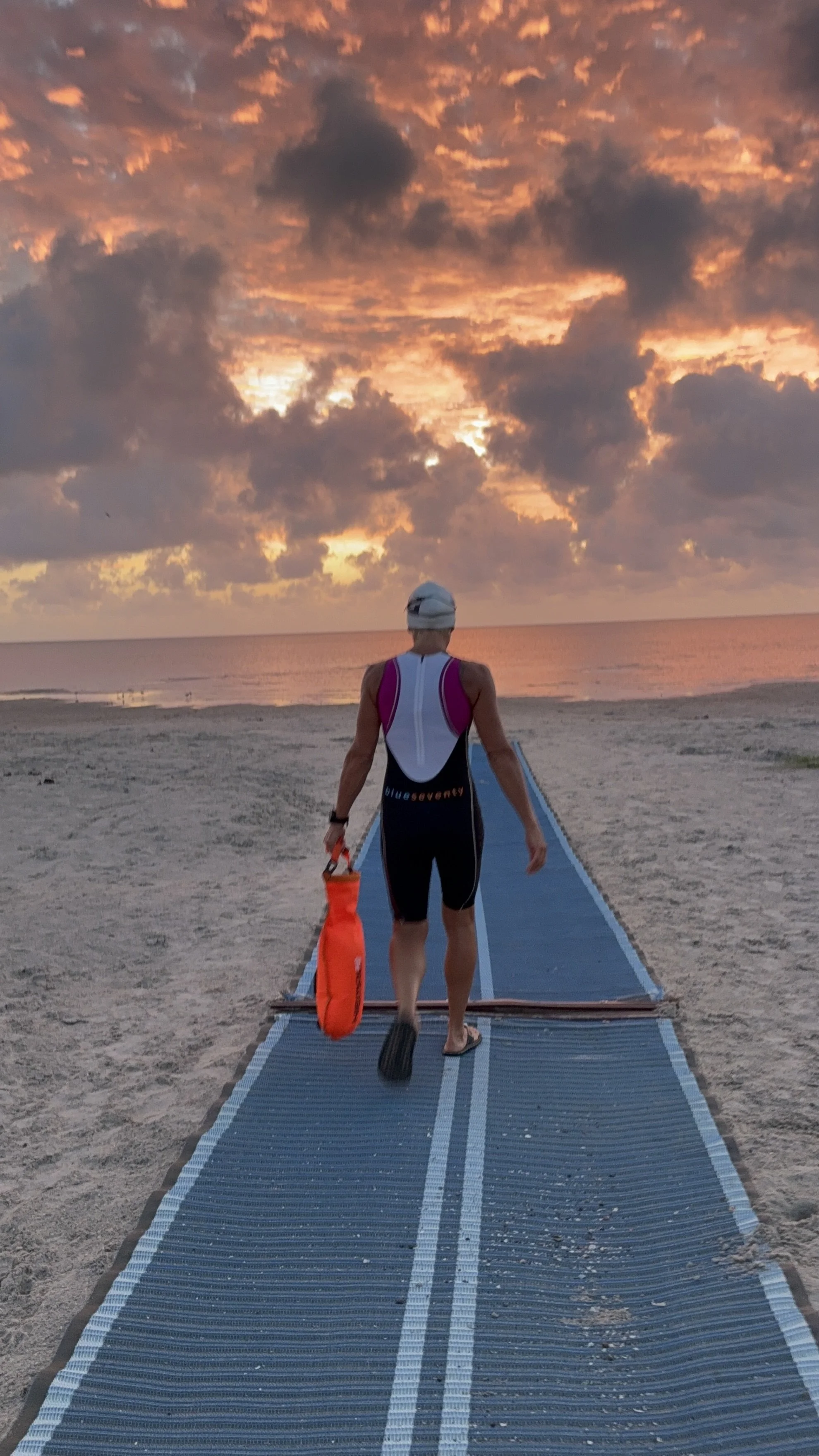
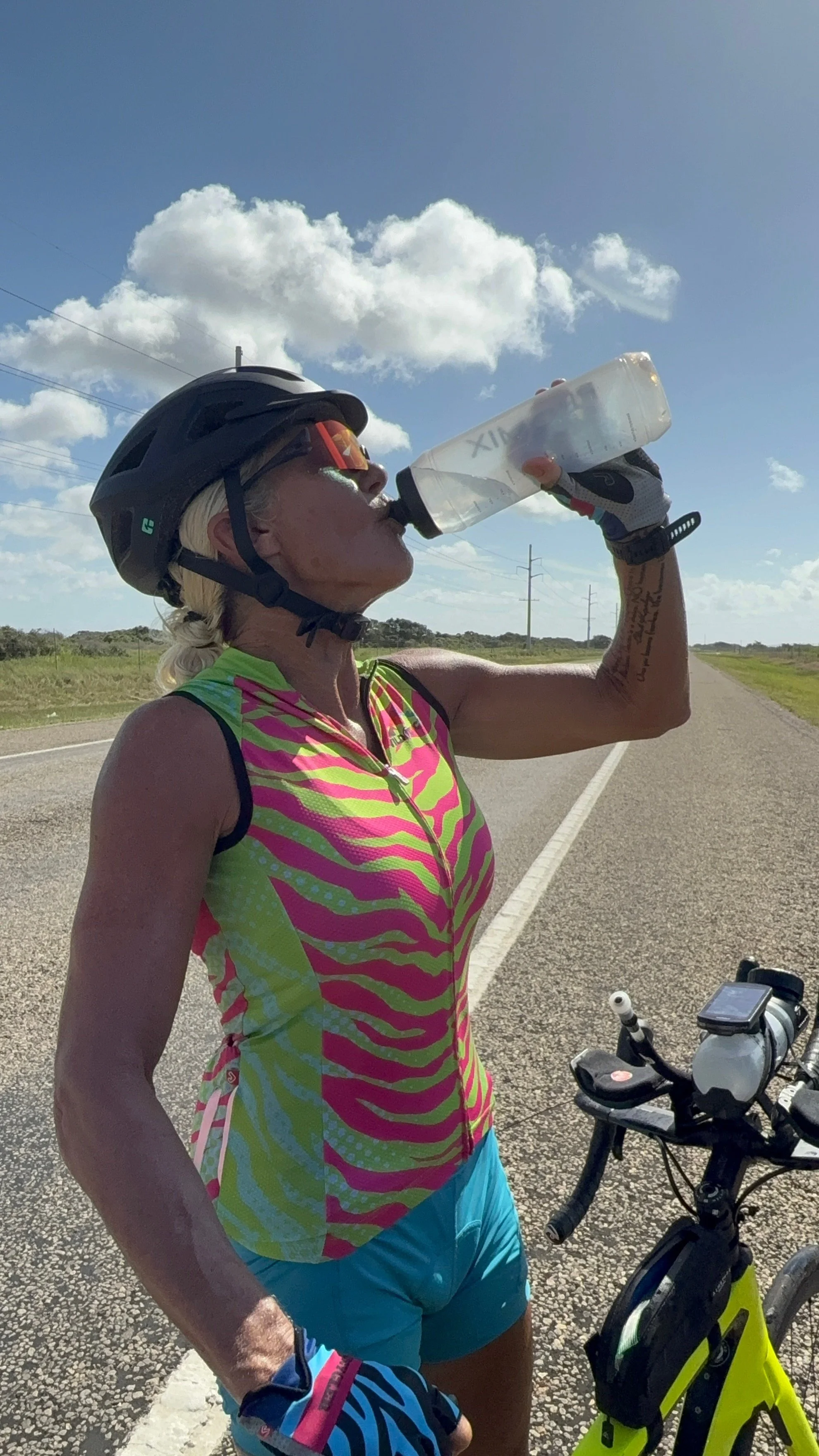
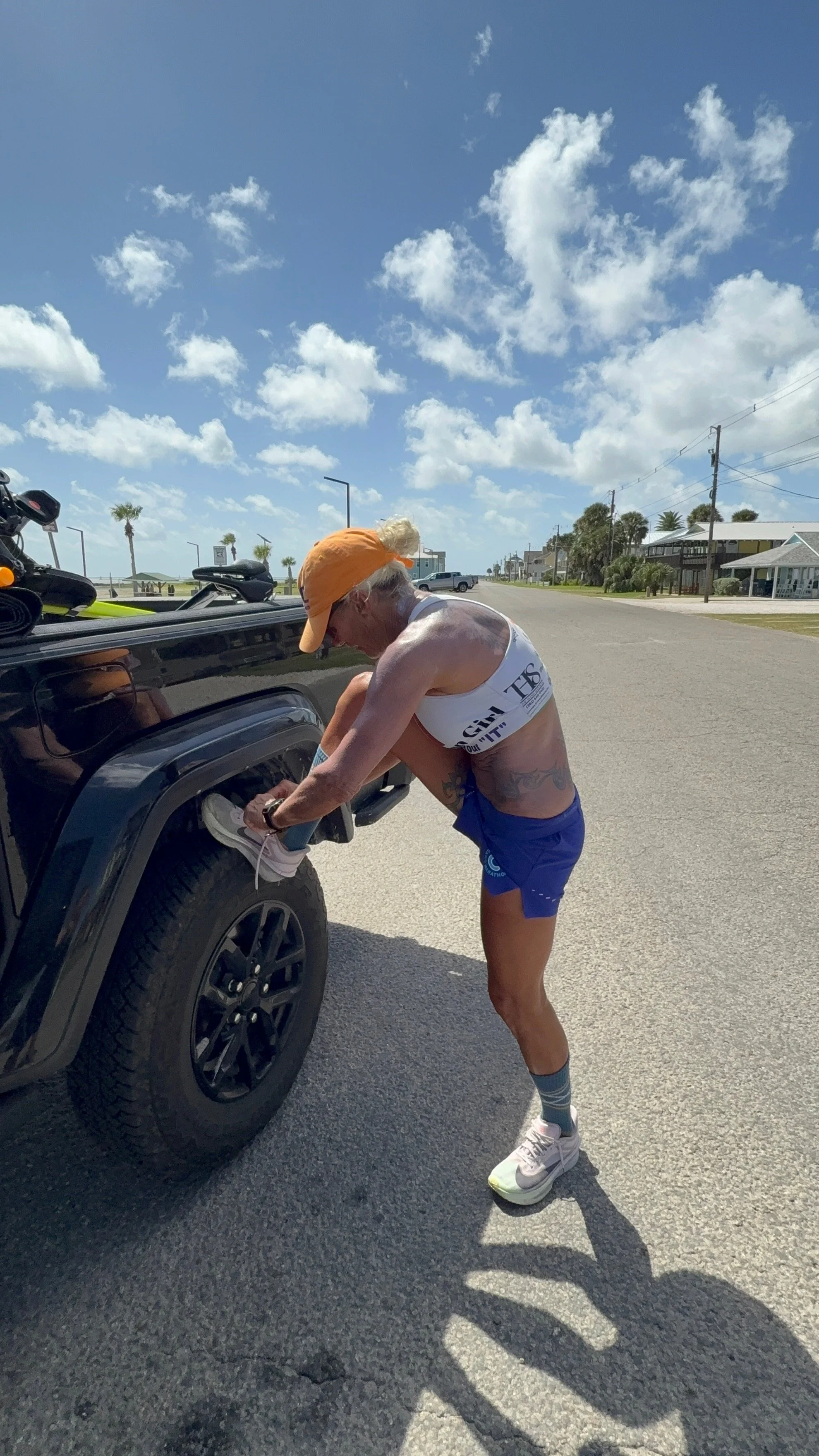
But somewhere along the way, this stopped being only about finish lines and medals.
why work~run~give
〰️
why work~run~give 〰️
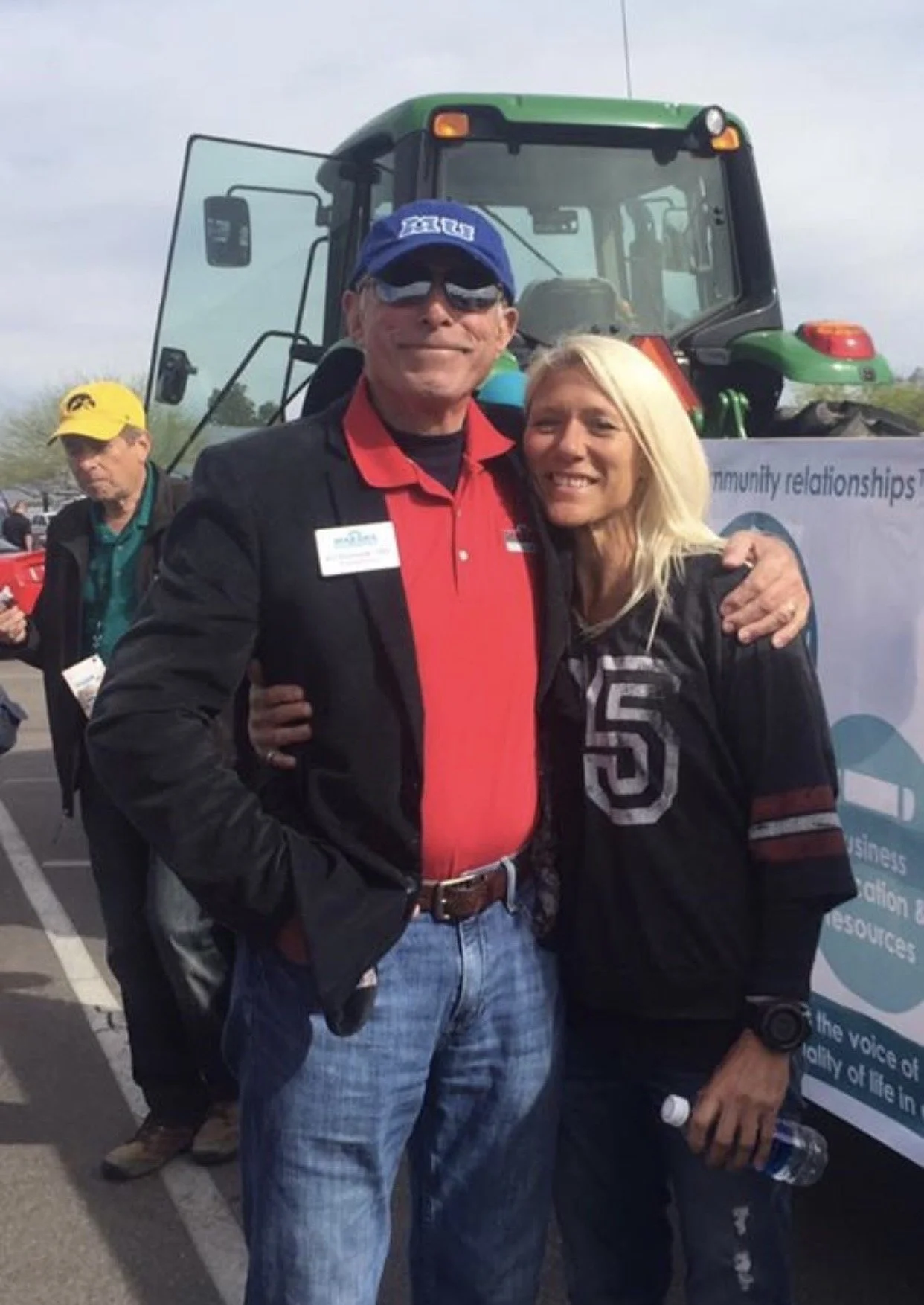
My dad had an enormous influence on the person I became. Losing him changed me, and as I began planning the final chapter of my Six Star journey, I knew I wanted it to mean more than simply completing six marathons.
I wanted to use the miles to help causes that have become part of my own story.
But I also wanted to do it differently.
Instead of simply asking people to donate, I decided I would work for those donations.
That’s how Work • Run • Give was born.
I own a cleaning and maintenance business, so I started offering my own time and labor — cleaning homes, tackling projects, organizing, landscaping, and doing whatever work I could — to help raise money connected to the causes I’m running for.
I work. I run. We give.
It’s a simple idea, but it represents something I believe deeply: the things that mean the most are usually the things we’re willing to work for.
This Is Bigger Than a Medal
Yes, I want that Six Star Medal.
Yes, I want to hear my name called across another marathon finish line.
And yes, I fully intend to cross that IRONMAN finish line — even though there are days when I’m still wondering what on earth I got myself into.
But this journey has become about something bigger.
It’s about seeing what can happen when we keep showing up. It’s about honoring the people and experiences that shaped us. It’s about turning difficult chapters into something useful.
And if my crazy collection of miles can raise some money, help a cause, inspire someone else to try something that scares them, or simply make somebody believe they aren’t finished yet…
then every mile was worth it.